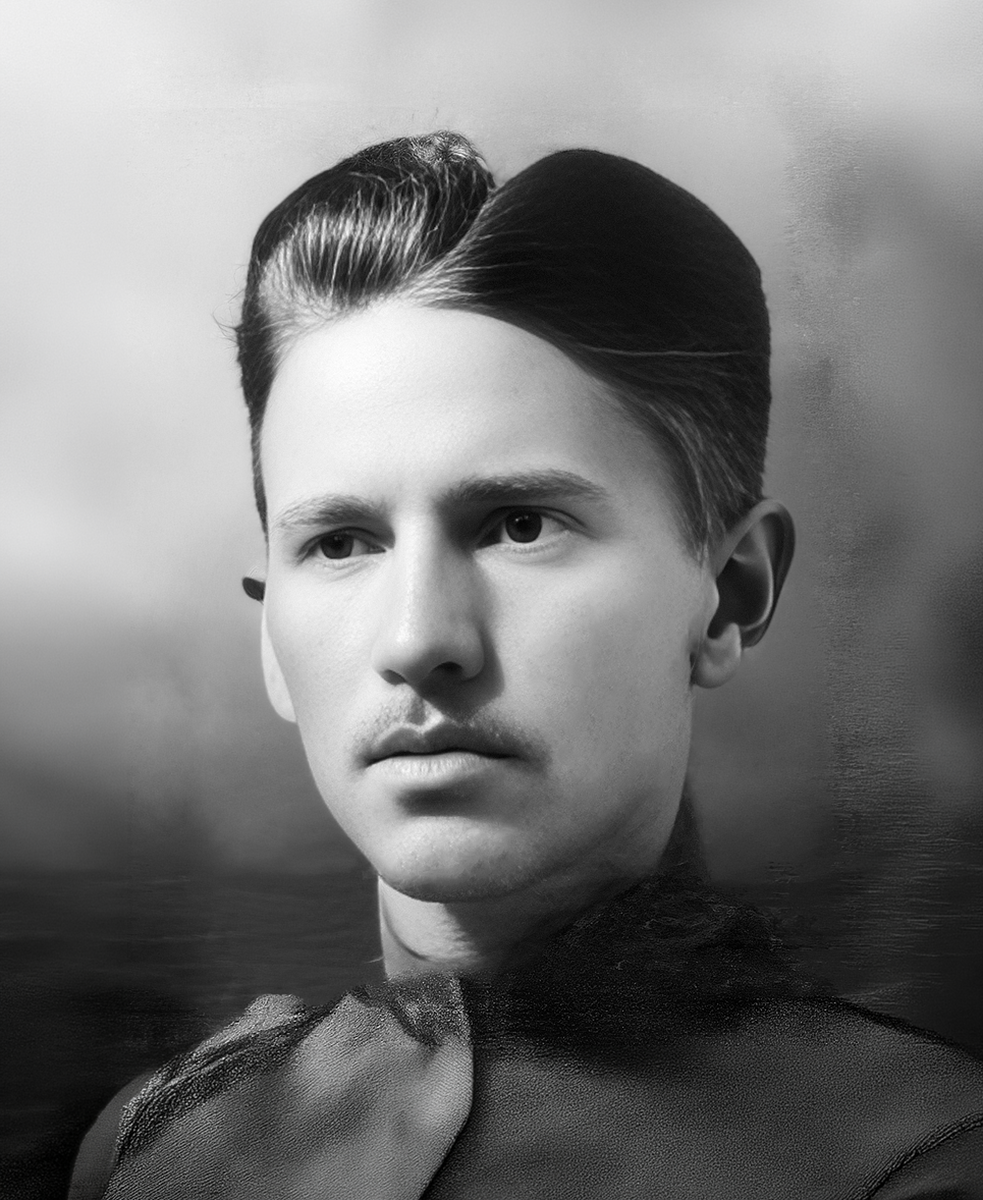
Bee Rife Osborne became the Kentucky National Guard’s first aviator on April 1, 1916, among the many firsts to follow. He participated in the first mass formation flight of 12 American airplanes from Hazlehurts Field, Mineola, Long Island, to the Philadelphia Navy Yard, 110 miles, without a compass, testing winter flying suits on Dec. 30, 1916. He was the first and only test pilot for the American Army in France, test-flying the American-built De Havilland DH-4, “Liberty,” on May 18, 1918.
Osborne accepted 600 planes for the French and became one of the earliest, if not the first, test pilots appointed by the U. S. Army in France. He was considered a tip-top pilot, cautious while taking the necessary risks, which was an integral part of his test-pilot mentality.
On May 18, 1918, 1st. Lieutenant Osborne took the first American-built airplane to the skies over the Air Service Production Center No. 2 Aerodrome Romorantin, France, 200 miles east of Paris. The significance of this historic first flight of an American aircraft piloted by an American officer was an indication to her allies and enemies that America was truly and wholly committed to the war effort, with men, material, and industry. When 1st. Lt. Osborn returned to the airfield; he was unaware of the big celebration planned for the flight. He received many bouquets of flowers and French commendations. He was subjected to lengthy oratory from various high-ranking American, British, and French officers present for the flight. Mrs. Florence Kendall, a prominent American War Worker, christened the ship “Lady Florence.” Years later, Osborne recalled that when he received flowers from Mrs. Kendall, he told her to “Hold those flowers until I come down, I might need em’ then”, alluding to the possibility that his flight might not be a success.
On May 20, 1918, two days after the historic flight, Bee Osborne was promoted to Captain in the Air Service. Then, on May 24, 1918, Army Aviation was removed from the Signal Corps and renamed the Army Air Service. Captain Osborne was the chief inspector of aeroplane engines of the A. E. F. (American Expeditionary Force), this was quite a big job.
On July 28, 1914, in Europe, what would become known as the “War to End All Wars” began. The United States would enter the war on April 6, 1917, more than two and a half years after it had started. By 1914, Bee was back in Lexington working for Western Union as the night telegrapher. On September 9, 1914, he and Cora Cook of Lexington eloped on his motorcycle to Versailles and were married. A call for trained telegraphers was issued, and Bee answered it. In late August 1915, the Kentucky National Guard established its first Signal Company in Lexington, Kentucky. Osborne was one of the first to join this new unit; on September 1, 1915, he was promoted to First Class Sergeant due to his civilian training. His physical description listed him as weighing 119 ½lbs.; height 5′ 4 ½”; gray eyes, brown hair, and light complexion.
Company A’s commander, Otto Holstein, wanted to establish an Aviation Section for the Signal Corps in Kentucky, as well as a Kentucky Aero Club and an aviation school at Lexington. Initially, Bee Osborne was interested in flying when a representative of the Aero Club of America came to Lexington and attended an evening drill of the company. In a 1959 interview, Osborne remarked that the gentlemen from the Aero Club gave a talk on the subject and asked whether anyone would volunteer for flying instruction. I didn’t have any more sense than to say “I would go.” Osborne was an ideal candidate to become an aviator; he was small in stature and was later described as a stock, grim-faced, hard-nosed little pilot who would fly anything he could get off the ground.